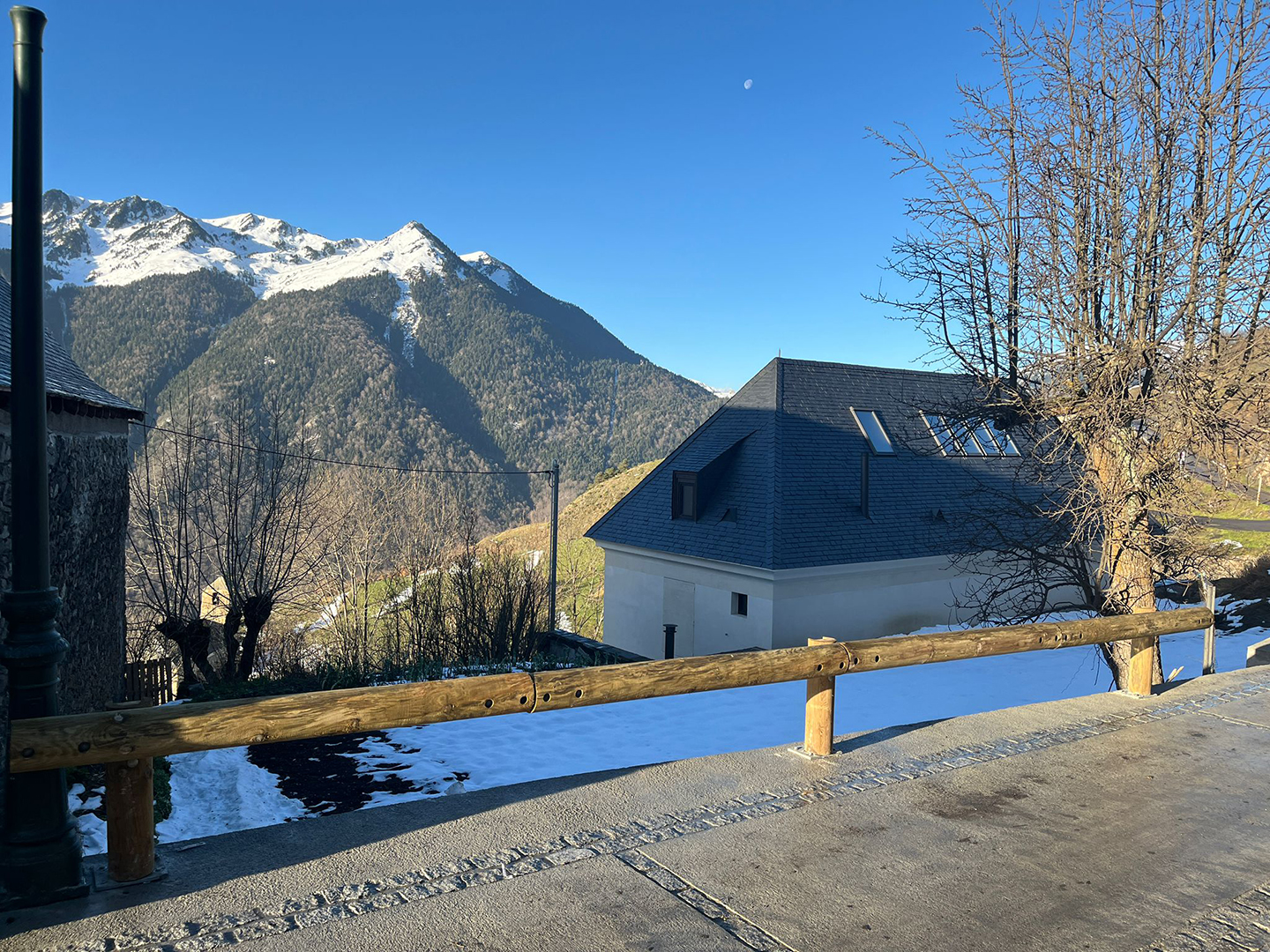
The project involved Construction Management for the urban development of Sant Pere Street, located in the town of Arres de Sus, in the Val d’Aran.
Originally urbanized in the late 1970s, the street had become outdated over time, both in terms of its pavement and infrastructure. Given that Arres is one of the highest-altitude towns in the valley, it experiences frequent snowfall and ice during winter. To address this, unpolished stone pavers were used in pedestrian and parking areas, as they are highly resistant to snowplows and provide a non-slip surface for pedestrians.
For the vehicular section, which connects with the Bassa d’Arres, two concrete wheel tracks were installed, as the street is regularly used by forestry vehicles and tractors.
Regarding utilities, the old lead and asbestos cement pipes were replaced with new polyethylene piping, ensuring a safer and more durable system.
For public lighting, the same type of luminaires already present in the village core were installed to maintain visual coherence. Finally, new safety guardrails were finished in wood to better blend with the natural surroundings.
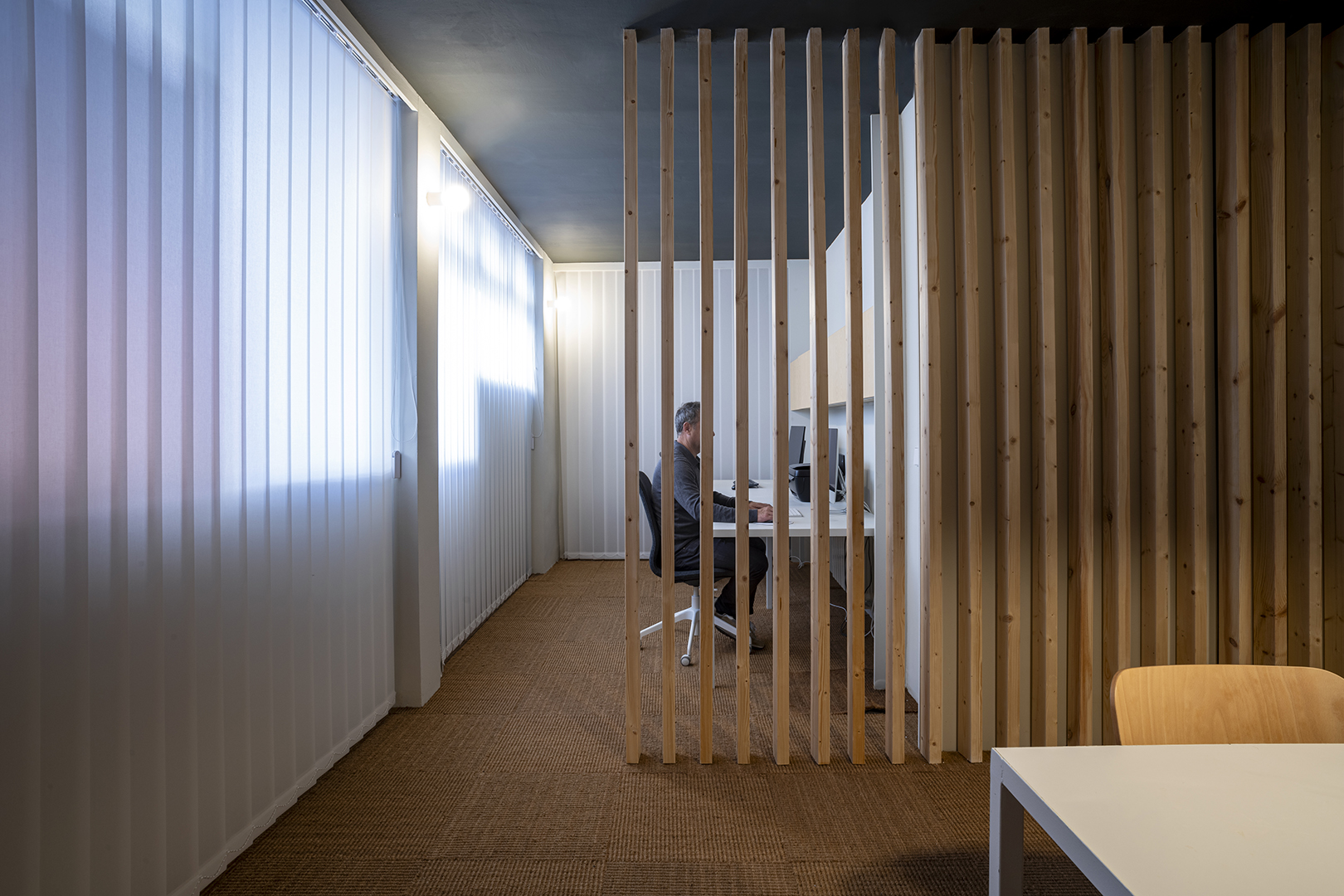
Located in the galleries of Village Baqueira 1500, this space — which has served various purposes over the years — has been transformed into more than just an office: it is now a shared, collaborative meeting place.
The layout is organized around a central meeting table, with two workstations and printers positioned at one end, complemented by a restroom and a small kitchenette.
To address the difference in height between the entrance and the main room, a raised entryway has been created, functioning as a reception area. This space is separated by a wooden screen that also defines the boundary between the work area and the central zone. The connection to the outside is emphasized through a white screen on the windows facing the plaza, while local materials — oak, slate, and rope — bring warmth and character to the space.
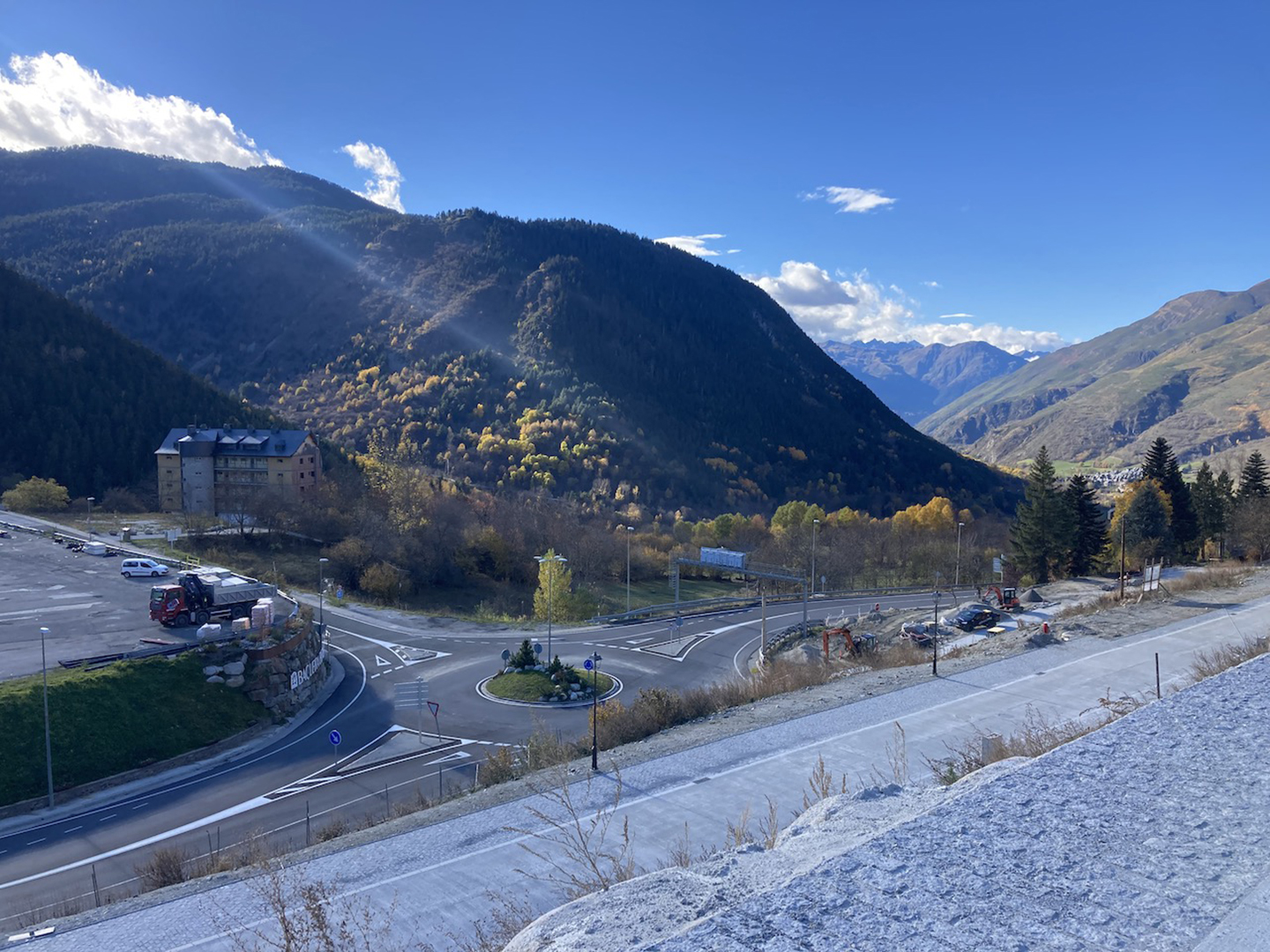
In this assignment, we have carried out the construction management for the Urban Development Project of the Special Plan 2 in Baqueira.
Located at the 1500-meter level of Baqueira Beret, this new development is strategically situated on the sunny side, to the left of the 1500 parking lot, with views of the forest and the Aran Valley, and just below the road to Beret. The area is surrounded by the Baqueira Village core and a privileged natural environment.
The project involves the creation of a continuous street with two sections and a 180º curve, allowing for the connection between two different elevation levels. This road links the Beret road at its highest point with the Ruda-Baqueira roundabout at its lower end, improving accessibility and mobility in the area.
The development has included comprehensive civil works, such as earthmoving and terrain adaptation, as well as the installation of basic service networks including sanitation, medium and low voltage electricity, telecommunications, fire protection network, piped gas network, and public lighting. Landscaping, signage, and urban furniture have also been implemented.
Concrete has been used for the pavement instead of asphalt, reducing the use of fossil materials such as tar. This development reinforces our commitment to efficient urban growth, integration with the natural environment, and sustainability in Baqueira Beret.

Creating meeting points is one of the central ideas of constructing public buildings; to think of spaces for people to interact and share. That is why, faced with the need of the Tredós town council (Val d’Aran, Pyrenees) to refurbish a social facility that was almost in disuse, it was clear to us that the success of the intervention was to provide it with a new programme of activities so that it could be used daily.
This new approach was the origin of the Tredós Civic Centre and made it one of those projects in which we are lucky enough to put into practice the basics of architecture for the community.
We began our project with a building in the centre of the village that was used as a social hall and that, over time, had been losing its function because it needed to be better equipped. Following the municipal intention to reactivate the space, our proposal focused on expanding its programme of uses to transform it into a space with new and more varied objectives as a cultural, educational and social centre. Thus, we had to enlarge its size and improve access for reduced mobility, energy efficiency, interior design and acoustics; therefore, we created new rooms to accommodate more people and events. To materialise the intervention, the central hall was divided into three sub-spaces that can be modulated with movable walls that allow each room to be adapted to the needs of each activity.
To make this new age visible, we decided to keep the existing building in its original state (stone) so that the extension intervention was carried out with lighter and more transparent materials (wood and glass). We intended to create a dialogue between the existing and the new, the opaque and the translucent.

We design to solve and provide answers that make our daily lives easier. And not only in the field of housing or public buildings but also in the field of urban furniture.
Eth Conselh Generau d’Aran commissioned us to study the functioning of the rubbish bin areas in the different localities of the administration to find a new solution to speed up the collection process and facilitate maintenance. Intending to cover waste-related problems and make the work of the operators easier, we designed versatile spaces that could be adapted to the needs of the inhabitants and workers. We opted for a modular and mechanised idea to replicate efficiently in other villages. We sought a personal and integrated image with the characteristic environment of the Pyrenees (simulating the surrounding mountains) and created “service boxes” for a friendlier and more organic urban landscape.

Living surrounded by nature is a precious commodity and almost a human necessity. That is why, as in the case of this house in Vilac (Val d’Aran, Pyrenees), we focused on combining the new with the traditional and created a contemporary home that blends in with the village landscape.
The project consisted of devising two volumes, the garage and house, which are joined underground. The house is separated from the interior village square and generates a courtyard towards the lower area, facilitating cross ventilation and indirect lighting from the north. In the southern part, we created a small plot dedicated to cultivation to reinforce the idea of a house linked to the land. We chose materials that respected the same design concept: wood and stone, a play of textures that camouflaged the village and mountains.

This house, located in Querimònia Square, in the village of Les (Val d’Aran – Pyrenees), was an old borda (a local traditional building). Its renovation consisted of preserving the classic construction typology but giving it a contemporary geometry using a light framing system.
We kept the stone of the main façade, which follows the wall that grows attached to the house, and we used wood for the rest of the house, a warmer and cosier material.
The building is L-shaped with a central entrance; this intervention thus generates a courtyard and provides fluidity in the route between the interior rooms. On the lower floor, we located the garage and a semi-outdoor room connected to the garden; the kitchen, living room and bedrooms are on the upper floor.

The Haro Museum, located in the historic centre of Les (Val d’Aran, Pyrenees), is the space responsible for keeping alive the flame of the tradition of the “crema deth Haro”, the summer solstice festival, intangible heritage of humanity since 2015.
The renovation of the building was a project steeped in history and symbolism. Our idea was to respect the original building, constructed in the late 1920s as a rural school, as much as possible. Over the generations, this modest building has become a symbol of the village. This meant we wanted to keep the entire exterior skin intact while emptying the interior walls to create a large open-plan room that would serve as a museum space. In addition, we removed the stepped entrance from the square and moved it to the flat end of the building, thus constructing accessible access for everyone.
We wanted the new building to act as a brazier to keep alive the fire that, on the night of 23 June, is lit in the trunk of the Haro tree throughout the year. We built a place where the fire could return at dawn, almost drowned in ashes, to rest until the following year.

They say the key to good stories is to unite content and form, the what and the how. In this house, located in Avinguda de Sarrià (Barcelona), we sought to harmonise our intervention with the aesthetics of the building, a 1970s estate characteristic of the style of the period.
Our work focused on rethinking the spaces to update the layout and give them visual amplitude by opening the kitchen to the living room with a bar. In addition, we wanted to provide the flat with the original atmosphere of the building both in the choice of materials and in the design of the custom-made furniture. We opted to take inspiration from an iconic era.

Sant Gervasi (Barcelona) is an urban nucleus comprising classical buildings with long houses and two orientations. The refurbishment of an apartment in Plaza Molina consisted of bringing to light what made this neighbourhood a wealthy area.
For the daytime zone, facing the street, we rescued the mouldings on the ceilings, the reliefs on the doors and windows, the handles and knobs of the time and the hydraulic flooring so typical of the city. We wanted to preserve and maintain the solid wood parquet flooring as a key restoration point for the night area, which overlooks a courtyard.
